
Chinese Landscape Painting AI Art: Ink, Mist and Deep Distance
Two Song dynasty scrolls from The Met show how Chinese landscape painting builds mountains out of brushstrokes and air out of blank silk. Below are the traits to copy and prompts you can paste straight into the studio.
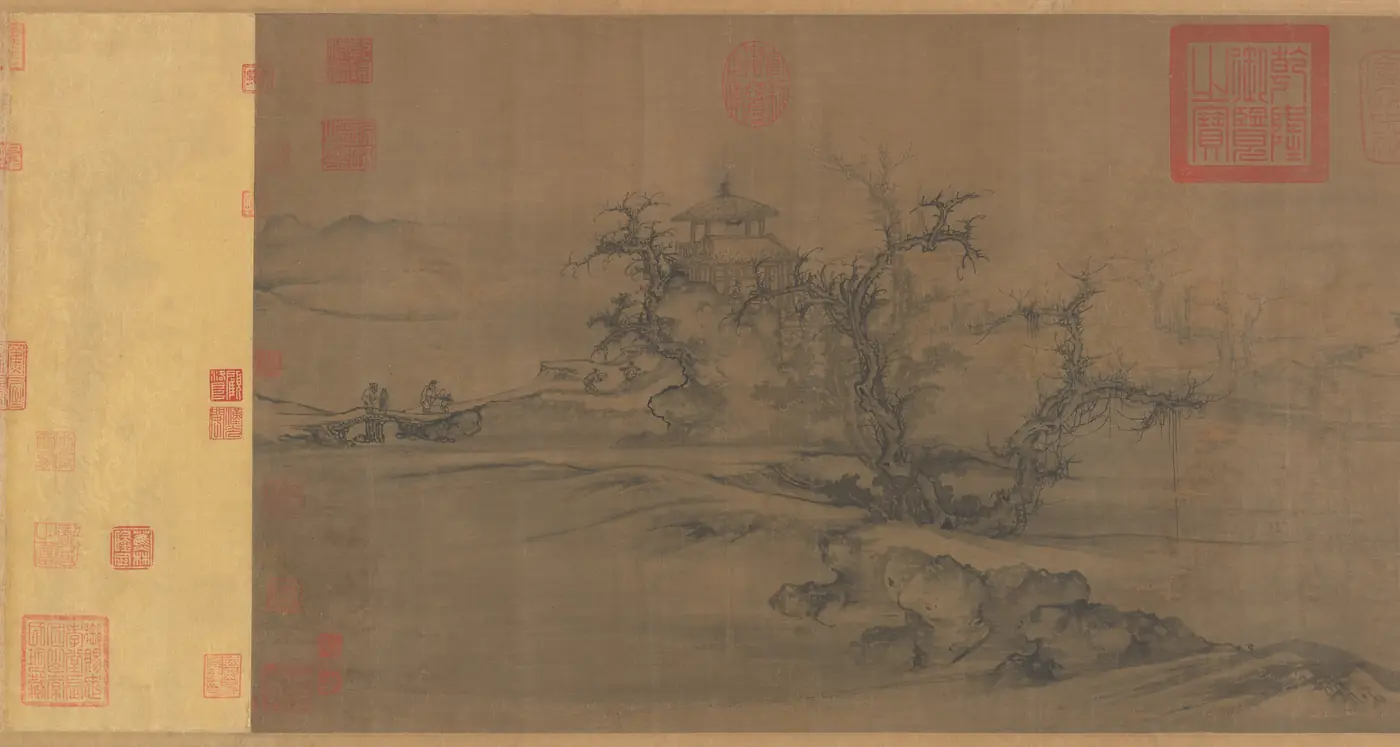
Old Trees, Level Distance · Guo Xi · ca. 1080
Public-domain original · CC0 public domain · The Metropolitan Museum of Art, Gift of John M. Crawford Jr., in honor of Douglas Dillon, 1981 · Source
What Makes Chinese Landscape Painting Distinct
Chinese landscape painting, called shanshui (literally "mountains and water"), is the genre that treats peaks, rivers, trees and mist as the main subject rather than a backdrop. It does not use a single vanishing point the way a European landscape does. Instead, the painter moves your eye through the scene in stages: a rocky foreground, a stretch of water or cloud, then fainter ridges that fade into the silk. Ink is the main material, and color, when it appears, stays muted.
When people ask an AI generator for a Chinese landscape, they often type "Chinese style" and get a generic scene with pagodas and red lanterns. The look of real Chinese landscape painting comes from specific choices: texture strokes on the rocks, ink that shifts from dark to pale with distance, and large areas left empty. This page shows two originals, names those choices, and gives you prompts that already contain them, so you only need to swap in your own subject.
Original Song Dynasty Landscapes to Study
Every painting on this page is in the public domain; the images come from museum open-access collections (CC0) or Wikimedia Commons. The AI makes new images in the style, not copies of the originals.
Old Trees, Level Distance · Guo Xi · ca. 1080
Guo Xi's handscroll is a textbook example of "level distance": gnarled trees and boulders sit close to you, then the view slides across open water to low hills that almost dissolve. Watch how the ink gets lighter with every step back; that gradient is how Chinese landscape painting creates depth.
Public-domain original · CC0 public domain · The Metropolitan Museum of Art, Gift of John M. Crawford Jr., in honor of Douglas Dillon, 1981 · Source
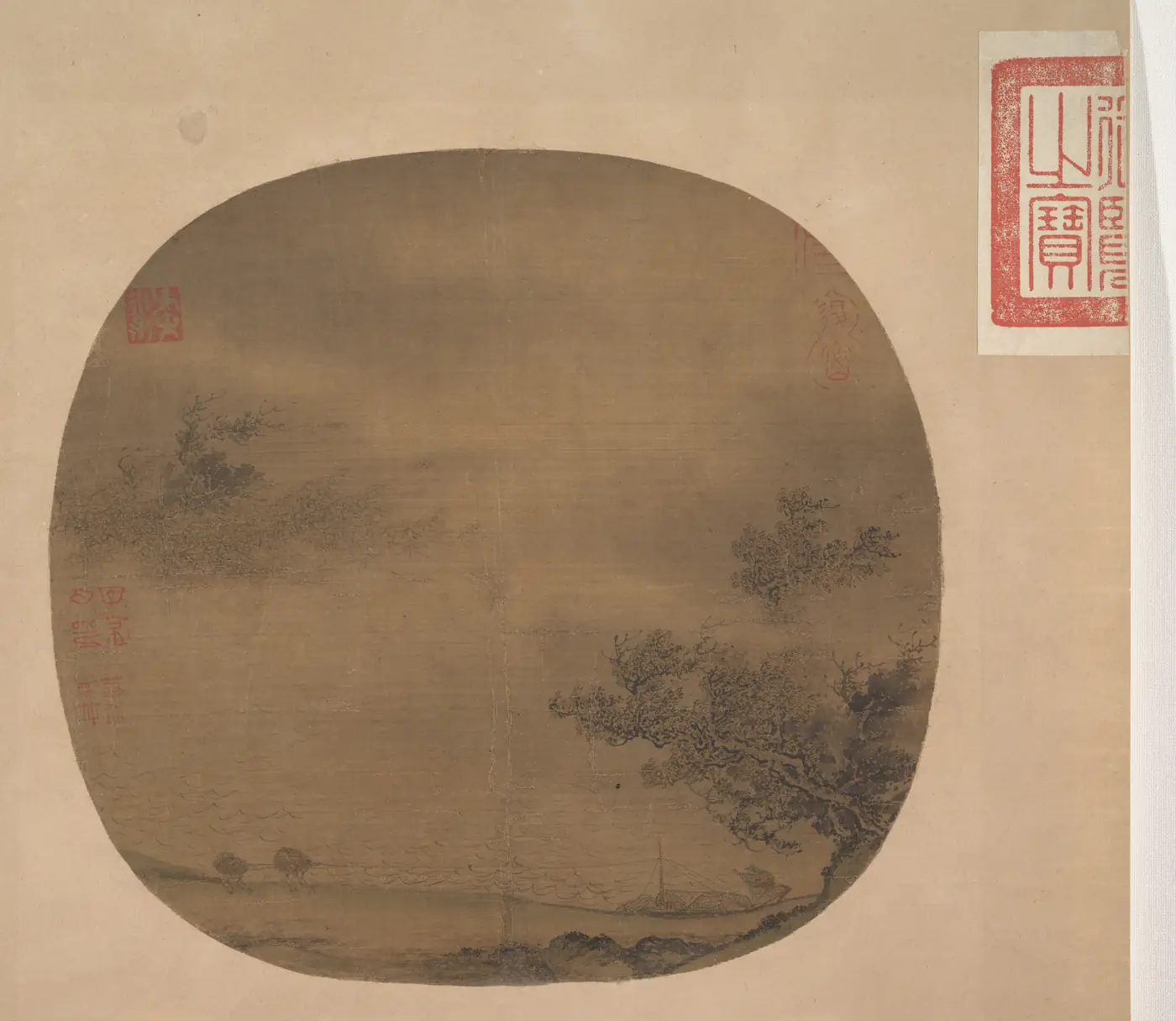
Towing a Boat in a Rainstorm · Unidentified artist (Southern Song) · late 12th century
This late 12th-century painting by an unidentified Southern Song artist shows figures hauling a boat along the shore while wind bends the trees and rain swallows the far bank. It proves a Chinese landscape can carry weather and motion, not just calm scenery.
Public-domain original · CC0 public domain · The Metropolitan Museum of Art, From the Collection of A. W. Bahr, Purchase, Fletcher Fund, 1947 · Source
Four Traits of Chinese Landscape Painting
Texture strokes (cun) on rock
Rocks and mountains are modeled with repeated brush marks rather than shading. Guo Xi favored curling "cloud-like" strokes that make a mountain look as if it were rising and turning. In a prompt, "ink texture strokes on the rocks" does more than "realistic mountains".
Three kinds of distance
The treatise associated with Guo Xi describes high distance (looking up at a peak), deep distance (looking into a valley) and level distance (looking across to the horizon). A single Chinese landscape painting can combine all three, which is why the views feel walkable.
Empty space that means something
Blank silk stands for water, sky or mist. It lets the composition breathe and leaves room for an inscription or a red seal. Asking for "generous empty space" keeps the AI from filling every corner.
Ink first, color second
Most Song landscapes are ink with light washes of ochre or indigo. The overall tone is a warm gray on aged silk. Avoid words like "vibrant" if you want a Chinese landscape that looks historical.
Chinese Landscape Painting Prompts
Paste any prompt into the studio as it is, or replace the subject and keep the ink, distance and empty-space cues.
Water town
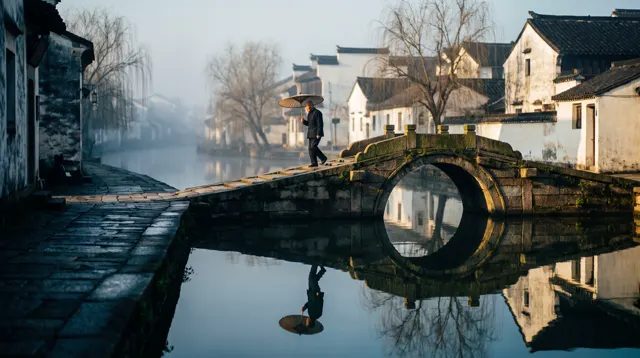
A Chinese landscape painting of a canal town in the Song dynasty style, white-walled houses along the water, a stone arch bridge and a small boat, soft ink washes, distant hills fading into mist, generous empty space, aged silk texture, level-distance composition
Phone wallpaper
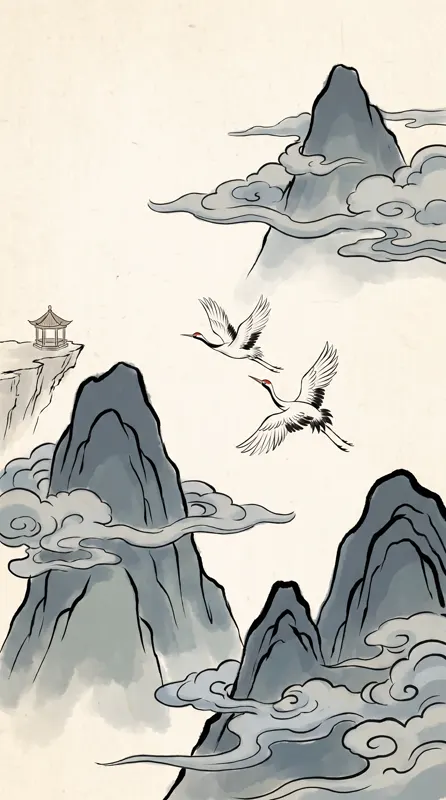
Vertical Chinese landscape painting, tall peaks rising out of drifting clouds, curling ink texture strokes on the rocks, pine trees clinging to a cliff, ink fading from dark to pale, empty sky at the top, light ochre wash, Song dynasty hanging scroll
Modern city
A modern city skyline painted as a Northern Song Chinese landscape, skyscrapers rendered as layered mountain peaks wrapped in mist, dry ink texture strokes, pale ink in the distance, a small line of calligraphy in the empty space, painted on silk
Cat portrait
An orange tabby cat sitting on a rock by a stream, looking back over its shoulder, set in a Chinese landscape painting with pine woods and far mountains, fine ink lines, light color washes, mist as empty space, handscroll composition, old silk grain
Images we made in a similar style
These are new AI images, not the originals. Open one to see its full prompt and make your own.
How to Generate a Chinese Landscape Painting
- 1
Pick a prompt
Start from one of the Chinese landscape prompts above. Change the subject to your own place, pet or object, but keep the phrases about ink, texture strokes, distance and empty space.
- 2
Choose the format
A wide frame suits the handscroll feel of level distance; a tall frame suits a hanging scroll with a towering peak. Pick vertical for a phone wallpaper.
- 3
Adjust and regenerate
If the colors come out too bright, add "mostly ink, pale washes". If the picture feels crowded, add "large empty areas of silk". For an older look, add "aged, darkened silk".
A Short History of Chinese Landscape Painting
Chinese landscape painting matured during the Five Dynasties and the Northern Song (10th–11th centuries). Painters such as Jing Hao, Guan Tong, Dong Yuan and Juran set out two broad approaches: the towering, rocky mountains of the north and the softer, rounded hills of the Jiangnan region in the south. Li Cheng, Fan Kuan and Guo Xi then pushed the monumental landscape to its peak. Guo Xi served at the court of Emperor Shenzong, and the ideas gathered in the treatise linked to his name are still taught to students of Chinese landscape painting today.
After the court moved south to Lin'an (present-day Hangzhou), Southern Song painters like Ma Yuan and Xia Gui often pushed the scenery into one corner and left the rest as mist, a habit later nicknamed "one-corner Ma" and "half-side Xia". From the Yuan dynasty onward, scholar-painters prized personal brushwork over careful description, yet the structure of Song landscapes remained the model that later artists copied. When you prompt for a Song-style Chinese landscape, you are asking for that disciplined structure.
Chinese Landscape Painting FAQ
Is it legal to make AI images in the style of Chinese landscape painting?
Yes. The Song paintings on this page are centuries old and in the public domain, and a painting style cannot be owned by anyone. Just don't present a generated image as a genuine antique or as the work of Guo Xi. Images made on a paid plan can be used commercially.
Which words in a prompt matter most for a Chinese landscape look?
Technique words beat vague ones. "Ink texture strokes", "ink fading with distance", "generous empty space", "level-distance composition" and "aged silk" steer the result far better than "oriental" or "Chinese style". Then name your subject and the season.
Can I turn my own travel photo into a Chinese landscape painting?
Yes. In the studio, upload your photo as a reference image and add the style cues, for example "Song dynasty Chinese landscape painting, ink texture strokes, mist, empty space". The layout of your photo is kept while the surface turns into brush and ink.
How is this different from a blue-green landscape?
The Chinese landscape painting on this page is mostly ink with pale washes. Blue-green landscapes use heavy mineral pigments, azurite blue and malachite green, for a richer, more decorative look. Say which one you want in the prompt.
More AI art styles
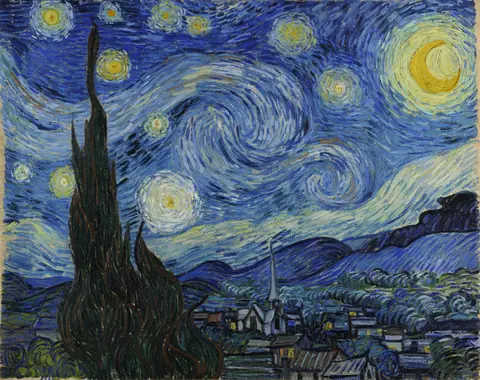
Van Gogh Style
Swirling strokes, thick paint, intense blues and yellows
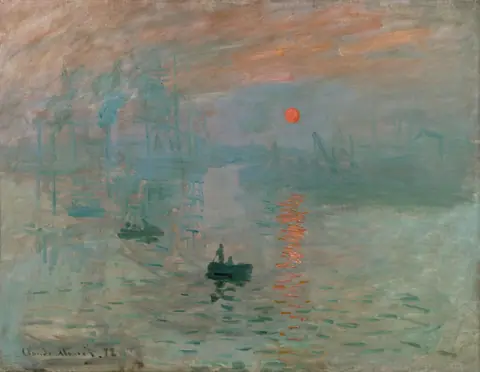
Monet Style
Broken brushwork that catches light, soft color, reflections on water
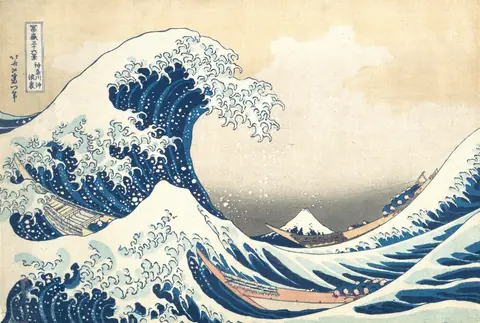
Ukiyo-e Style
Flat woodblock color, crisp outlines and Prussian blue
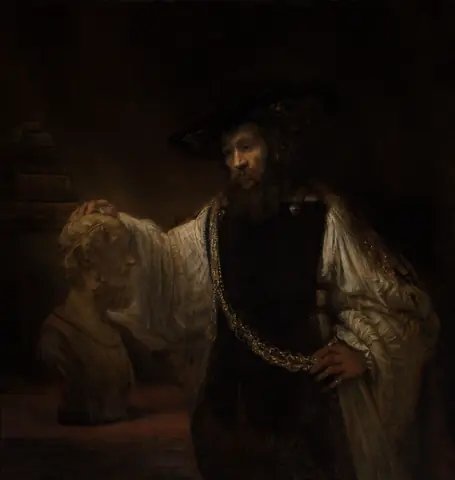
Rembrandt Lighting
One side light in a dark room and a triangle of light on the cheek
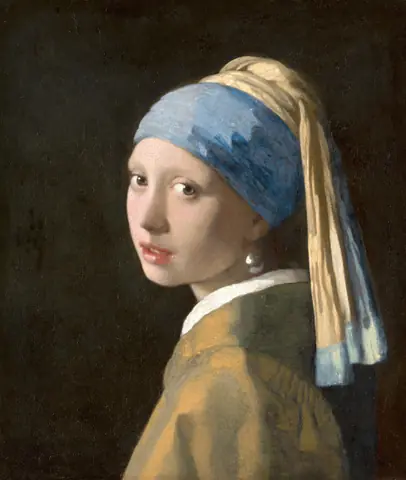
Vermeer Style
Soft window light, quiet interiors and pearl-like highlights
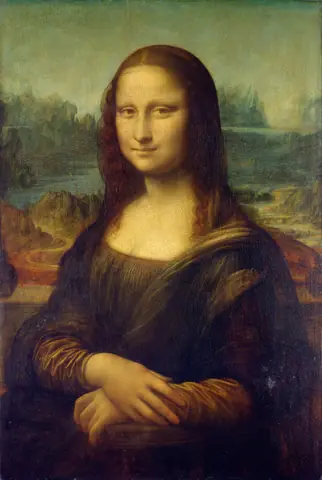
Renaissance Painting Style
Sfumato softness, balanced composition and classical figures
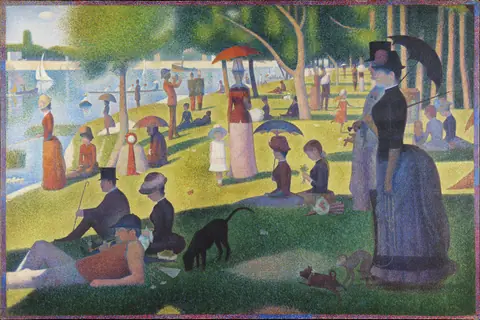
Pointillism
Images built from tiny dots of pure color that blend at a distance
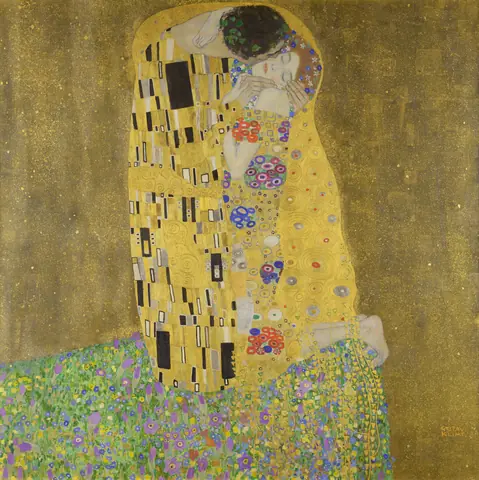
Klimt Style
Gold leaf, ornamental patterns and flattened, opulent figures
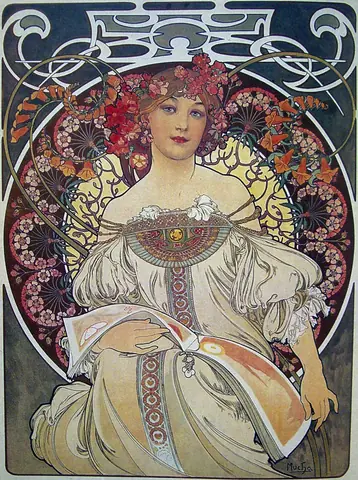
Mucha Style
Art Nouveau curves, halo circles and floral ornamental frames
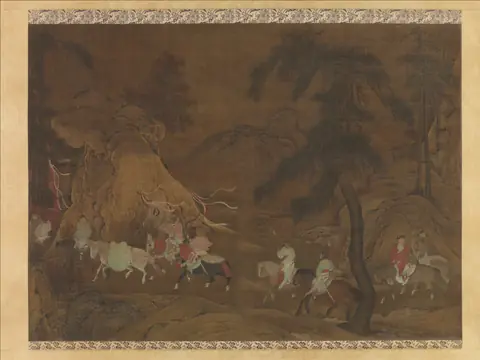
Blue-Green Landscape
Mineral blues and greens over gold-outlined, stacked peaks
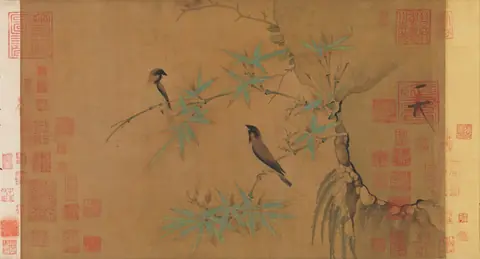
Gongbi Bird-and-Flower Painting
Hair-fine line work, layered washes and the feel of silk
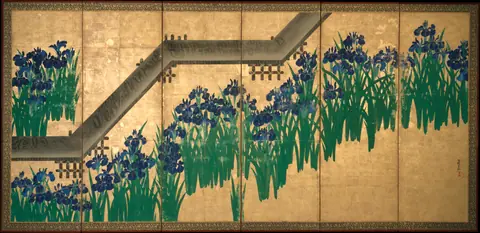
Rinpa Style
Gold-leaf grounds, bold flat shapes and repeated motifs
Chinese Landscape Painting pricing: pay per image, no subscription
Taster pack · 15 HD images
150 credits that never expire. No subscription, one per account.