
Ancient Chinese Style Prompts: Name the Technique and the Colors
Every image below was generated from the prompt shown with it. Copy a prompt, swap the subject, and get a new picture in the same ink-wash, gongbi or guochao style.
See 15 real examplesWhy Ancient Chinese Style Prompts Often Fall Flat
Typing "Chinese style" or "ancient Chinese beauty" usually gets you something that looks like a studio photo shoot or a game ad. What is missing is what makes ancient Chinese painting feel ancient: empty space, brushwork and traditional color. The words that actually do the work are technique words (ink wash, gongbi, paper-cut, screen print), pigment words (azurite blue, cinnabar red, mineral pigments) and classic motifs (cranes, auspicious clouds, bamboo shadows, a full moon).
This page collects 15 ancient Chinese style prompts we actually ran, covering ink-wash landscapes, Dunhuang apsaras, gongbi birds and flowers, xianxia scenes, modern Chinese interiors, festival posters and guochao illustration. Each image has a one-line note on the word that carries the picture, so you can keep it when you swap in your own subject.
15 Ancient Chinese Style Prompts with Real Results
Open an image to see its full prompt, copy it into the studio, or tap "Generate with this prompt".
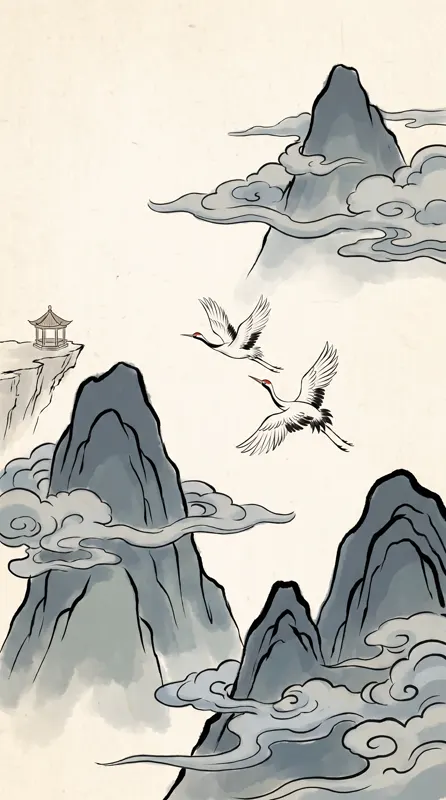
Ink-Wash Cranes and Mountains
Only cranes, misty peaks and one distant pavilion: with so few elements the empty space carries the mood, as in ancient ink painting.
Among ink-wash mountains, two cranes glide past mist-wrapped peaks, a small pavilion in the distance
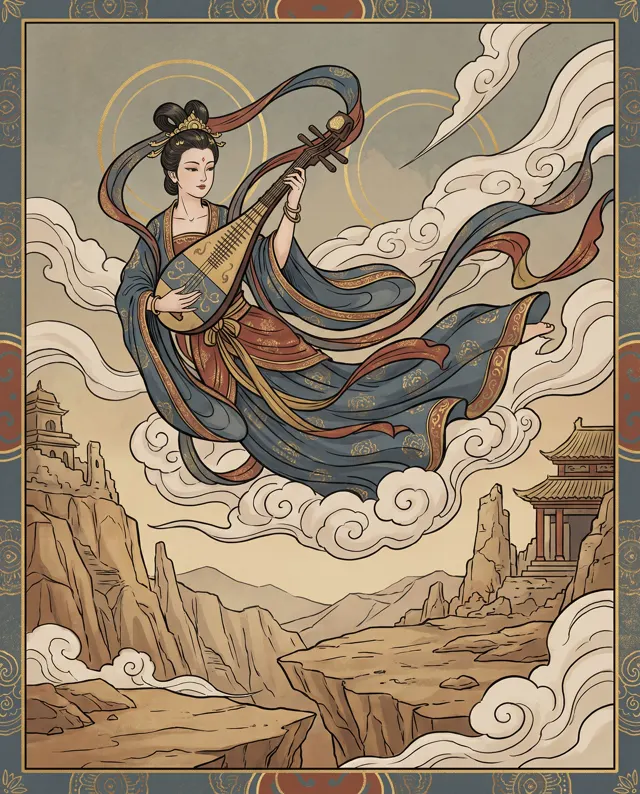
Dunhuang Flying Apsara
"Azurite blue, cinnabar red and gold" names the mineral palette of Dunhuang murals, and the ribbons and pipa set the apsara in motion.
A flying apsara in the style of Dunhuang murals, ribbons flowing, holding a pipa, in azurite blue, cinnabar red and gold
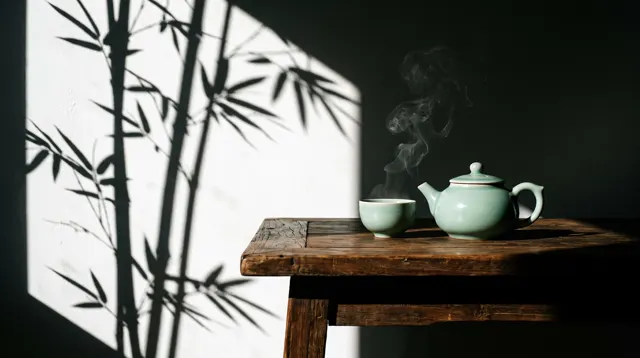
Zen Celadon Tea Set
"Bamboo shadows on a white wall" uses light instead of ornament, while celadon and curling steam keep the whole image still.
A celadon tea set on a solid wood tea table, bamboo shadows on a white wall, curling tea steam, serene East Asian aesthetic
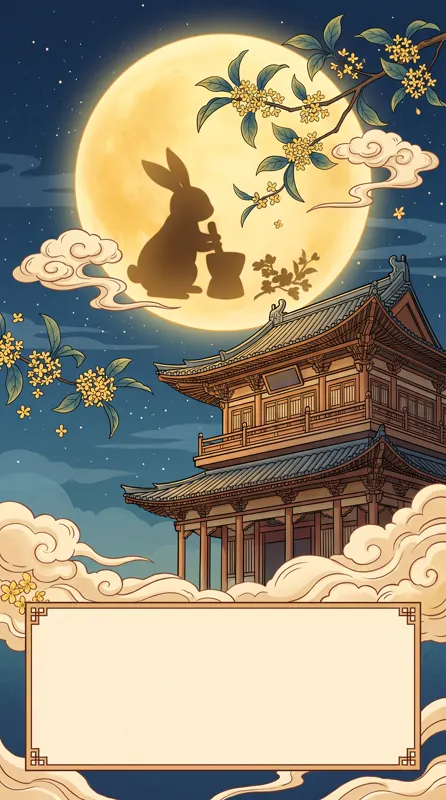
Mid-Autumn Festival Key Visual
The bracket "a complete round moon, not a crescent" avoids a common error, and the jade rabbit, clouds and osmanthus cover every Mid-Autumn symbol.
Mid-Autumn Festival key visual: a huge golden full moon (a complete round moon, not a crescent) above a classical pavilion, a jade rabbit silhouette in the moon, auspicious clouds and osmanthus, space at the bottom for a title
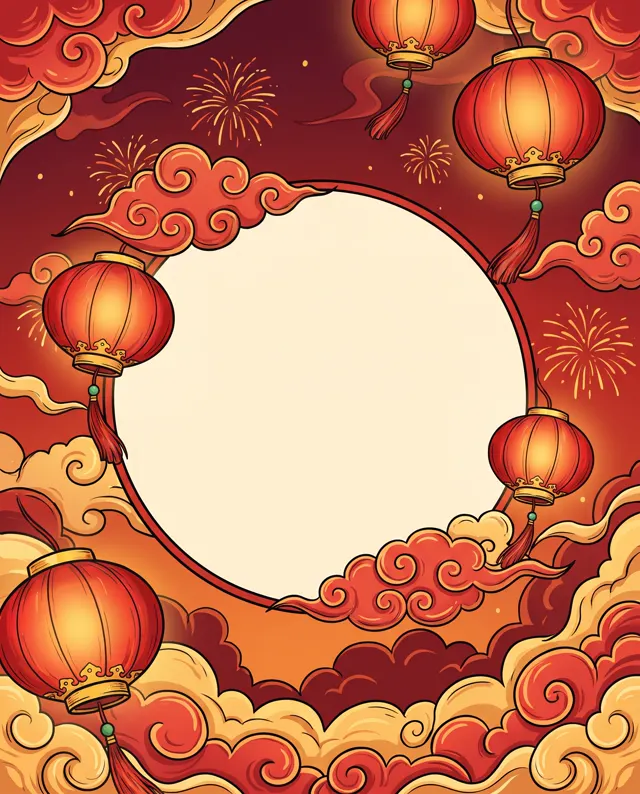
Chinese New Year Poster Background
Red and gold with clouds, lanterns and fireworks, plus "empty space in the middle for a title", so the background is ready for type.
Chinese New Year poster background: red and gold auspicious clouds, lanterns and fireworks, festive and lively, empty space in the middle for a title
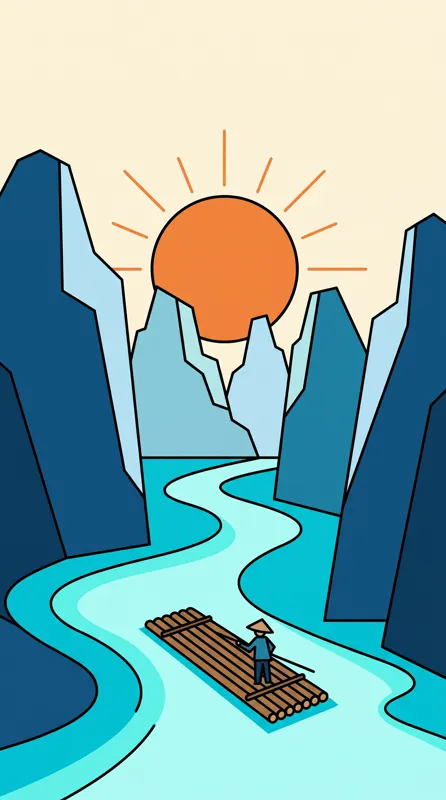
Retro Travel Poster: Guilin
"Vintage screen-print style" gives flat blocks of color, and karst peaks with a bamboo raft make Guilin instantly recognizable.
Retro travel poster illustration of Guilin karst mountains and the Li River with a bamboo raft at sunrise, vintage screen-print style, space at the top for a title
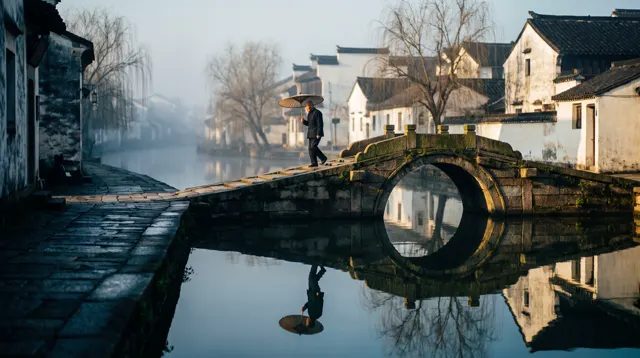
Misty Jiangnan Water Town
"85mm lens" and "color cinematic look" give the ancient town a photographic feel, and the figure on the stone bridge is the story.
A Jiangnan water town in morning mist, an elderly person with an umbrella crossing a stone bridge, the bridge reflected in the river, 85mm lens, color cinematic look
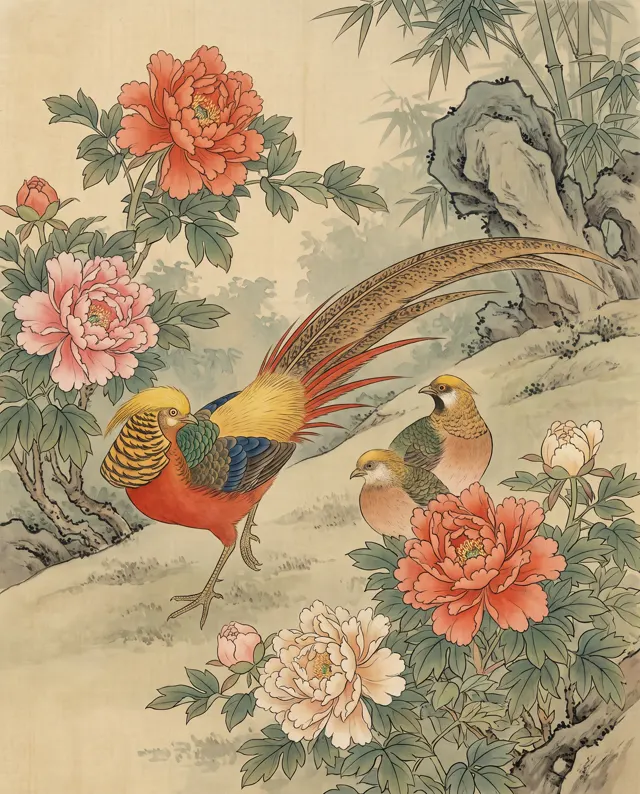
Gongbi Peony and Golden Pheasant
"Delicate outlines", "mineral pigment colors" and "silk texture" name the technique and the materials of gongbi painting in three phrases.
Peonies and a golden pheasant in gongbi fine-brush style, delicate outlines, mineral pigment colors, silk texture
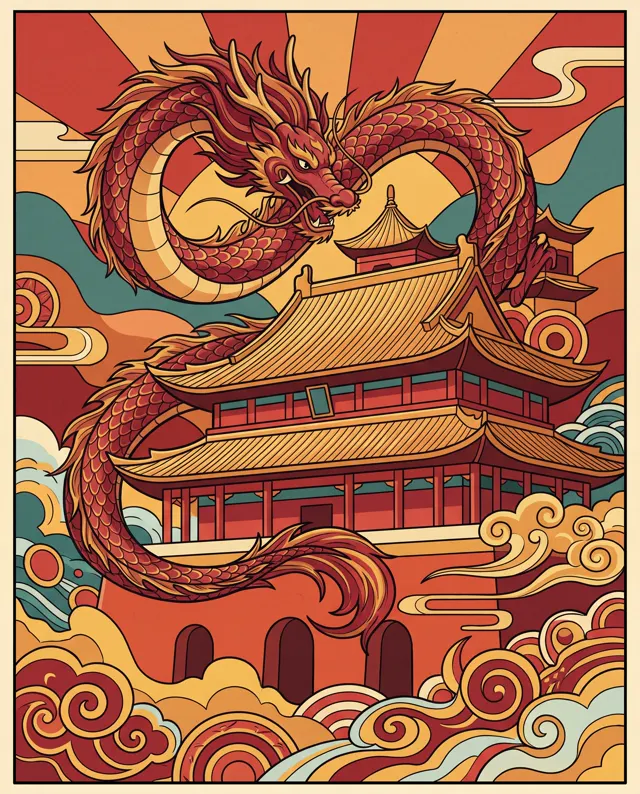
Guochao Dragon over the Palace
"Modern graphic-design feel" is what separates guochao from traditional painting, while red walls, gold tiles and cloud motifs keep the Chinese style.
Guochao illustration: an auspicious dragon coiling above a palace with red walls and golden tiles, red and gold palette, cloud motifs, modern graphic-design feel
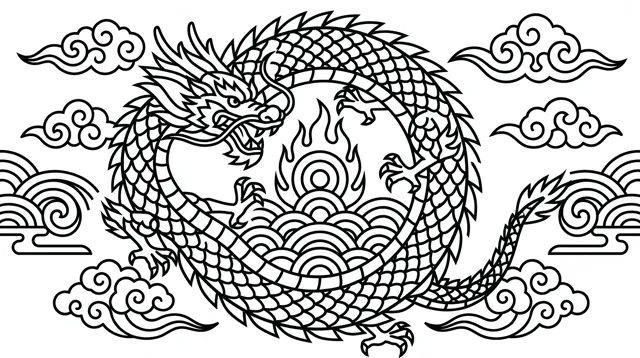
Coloring Page: Chinese Dragon
"No shading, no color, white background" guarantees clean line art, and a dragon chasing a pearl is a traditional auspicious layout.
Lunar New Year coloring page: a coiling Chinese dragon chasing a pearl surrounded by auspicious cloud patterns, black and white line art, clean lines, no shading, no color, white background
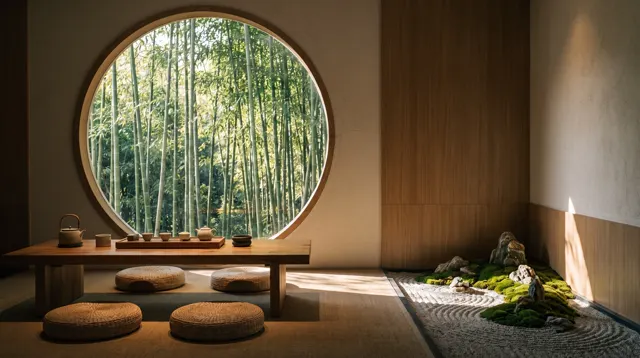
Modern Chinese Tea Room
A round moon window onto bamboo is the signature of modern Chinese interiors, and the dry garden and cushions complete the Zen mood.
Modern Chinese tea room interior render: a round moon window opening onto bamboo, a wooden tea table and cushions, a small dry garden in the corner, warm lighting, serene Zen mood
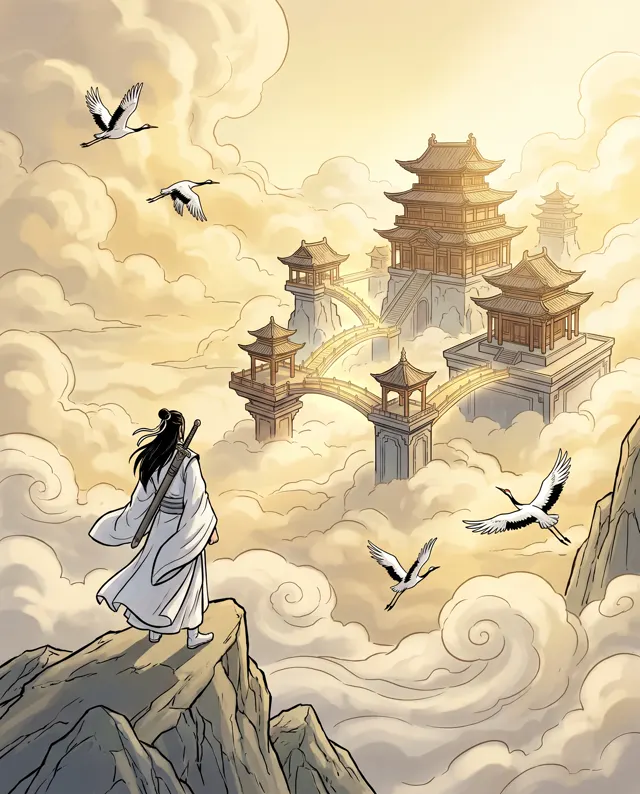
Xianxia Palace above the Clouds
The swordsman is seen only from behind: a small figure and a huge floating palace in golden morning light create xianxia scale.
Xianxia fantasy scene: an immortal palace floating above a sea of clouds, cranes flying past, a white-robed swordsman seen from behind on a peak, golden morning light
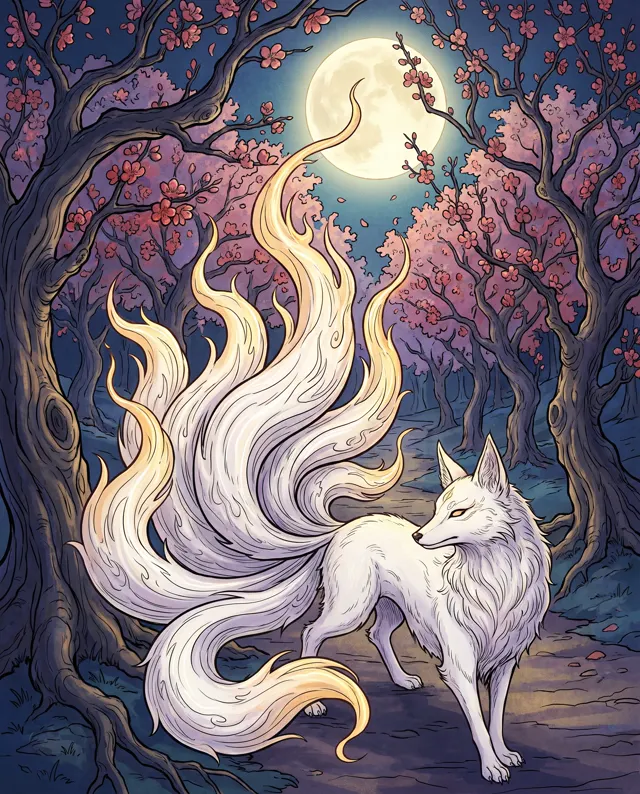
Nine-Tailed Fox from the Shanhaijing
"Nine tails spreading like flames" defines the silhouette, and the moonlit peach grove with rich gongbi color sets the Shanhaijing style.
Shanhaijing mythical beast illustration: a white nine-tailed fox in a moonlit peach-blossom grove, nine tails spreading like flames, rich gongbi style with fine lines
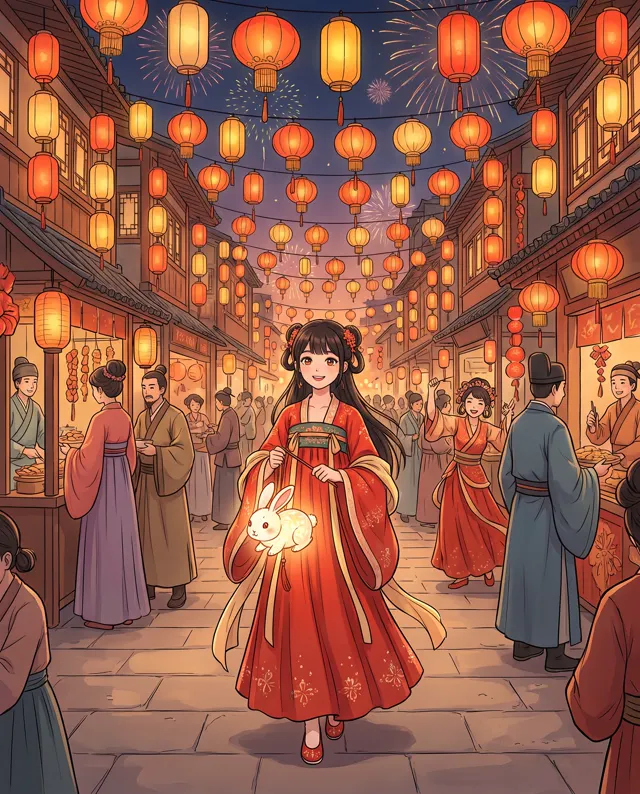
Hanfu Girl at the Lantern Festival
Red hanfu, a rabbit lantern and an old-town night market all point to the Lantern Festival, and warm light unifies the frame.
Chinese-style anime illustration: a girl in red hanfu carrying a rabbit lantern through an old-town night market hung with lanterns, warm lights, festive mood
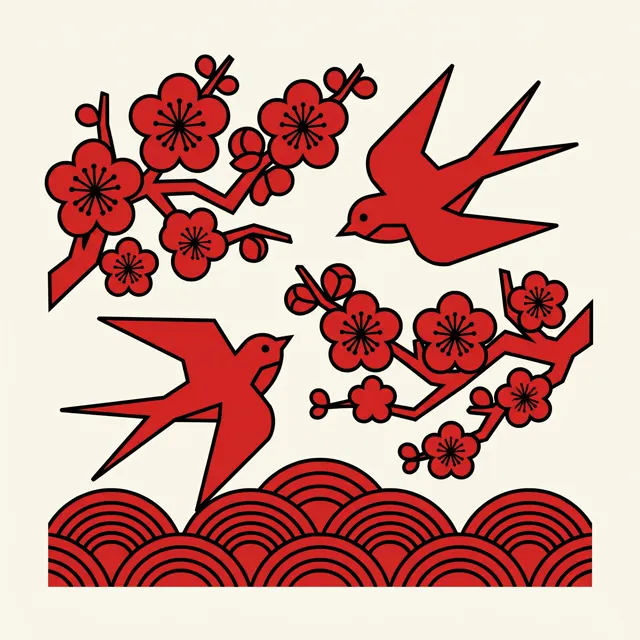
Paper-Cut Art: Swallows and Peach Blossoms
"Layered red paper-cut texture" on cream, with swallows, peach blossoms and ripples, uses motifs common in traditional paper-cutting.
Traditional Chinese paper-cut illustration: two swallows flying through blooming peach blossoms above ripples, layered red paper-cut texture, cream background
A Four-Part Formula for Ancient Chinese Style Prompts
- 1
Motif
One or two subjects with classical meaning; fewer is better
two cranes gliding past misty peaks
- 2
Technique
Say whether it is ink wash, gongbi, paper-cut or modern guochao
gongbi fine-brush painting, delicate outlines
- 3
Traditional palette
Use pigment names instead of plain color words
azurite blue, cinnabar red and gold
- 4
Space and surface
Ask for empty space and a paper or silk texture so it reads as a painting
generous empty space, silk texture
Common Ancient Chinese Style Prompts, Rewritten
Typical prompt
write me a text description for an image of a wandering swordsman on a rainy night
This asks someone to write a description; pasted straight into an image tool it has no figure details, setting or art style.
An ancient street in a Jiangnan town on a rainy night, a wandering swordsman in a bamboo hat and black straw cape walks alone with a long sword on his back, wet flagstones reflecting light, dim lanterns under the eaves, ink wash with light color, cool tones
Typical prompt
ancient Chinese beauty
No clothing, action or setting and no painting technique, so the figure tends to look like a studio photo.
Ancient Chinese style figure painting: a woman in a pale green ruqun playing the guqin in a waterside pavilion, willows and distant hills behind her, light mist, gongbi with soft color, gentle morning light, empty space
Typical prompt
Chinese style landscape painting
"Chinese style" is too broad; ink wash, blue-green and light-ochre landscapes are all Chinese, so name the technique and the layout.
Blue-green landscape painting: layered peaks and a winding stream, a village and a small bridge in the hills, a single boat on the water, azurite and malachite color, silk texture, a long horizontal scroll composition
Three Tips for Using Ancient Chinese Style Prompts
Lead with the technique
Put "ink wash", "gongbi" or "paper-cut style" at the start of your ancient Chinese style prompts so the model settles the technique first and paints the motifs that way.
Leave empty space
Ancient Chinese painting balances the full and the empty. "A small pavilion in the distance" or "generous empty space" says more than piling up towers, and leaves room for text.
Reserve a title area on posters
For Spring Festival or Mid-Autumn posters, write "empty space in the middle for a title" or "space at the bottom for a title" so the image is ready for layout.
Ancient Chinese Style Prompts FAQ
How do I use these ancient Chinese style prompts?
Open an image, copy the full prompt and paste it into the studio, or tap "Generate with this prompt". The same prompt gives a similar image, not an identical one, so generate a few and pick.
Can I turn my own photo into an ancient Chinese painting?
Yes. Upload a reference photo in the studio and keep the style words from these prompts, like "ink wash with light color", "gongbi, delicate outlines" or "layered red paper-cut texture", then say which person or scene to keep.
What is the difference between ancient Chinese style, guofeng and guochao?
Ancient Chinese style centers on historical figures and settings, so describe robes, hairstyles and pavilions. Guofeng is broader and pairs with ink wash, gongbi or paper-cut. Guochao mixes traditional motifs with modern design, so add "modern graphic-design feel".
Can I use these images commercially?
Images made on a paid plan can be used commercially, for example on festival posters, packaging illustrations or shop banners. Keep real people and brand logos out of your prompts.
More prompt topics
Ancient Chinese Style Prompts pricing: pay per image, no subscription
Taster pack · 25 HD images
250 credits that never expire. No subscription, one per account.