Usually yes, but two questions decide it: does the generator’s terms of service allow commercial use, and does the image itself infringe anyone’s trademark, copyright or likeness? Images from this site may be used commercially under our Terms and applicable law — the content risk is yours to manage.
Note: this article summarizes public information and is not legal advice. For significant commercial uses, consult a qualified lawyer in your jurisdiction.
Three layers of “can I use this?”
“Commercial use” sounds like a yes/no question. It is really three:
| Layer | The question | Who decides |
|---|---|---|
| Terms of service | Does the tool let me use its outputs commercially? | The generator’s terms |
| Content | Does the image contain someone else’s mark, work or face? | Copyright, trademark and publicity law |
| Publication | Does the platform require a label? Is the ad truthful? | Platform rules, labeling regulations, advertising law |
The first layer is easy to check. Real problems almost always come from the second and third.
Is an AI image protected by copyright?
China: the Beijing Internet Court case
In November 2023 the Beijing Internet Court ruled in what is often called China’s first copyright case over a text-to-image picture. The plaintiff had generated an image by designing prompts, adjusting parameters over several rounds and selecting the result, then posted it online; the defendant used it as an article illustration without permission. The court held that the plaintiff’s choices reflected original intellectual input, that the image was a protected work, and that the plaintiff owned the copyright.
The takeaway: an AI image is not automatically unprotected — human input matters. It was a case-by-case ruling, not a blanket rule. One practical lesson for creators is to keep a record of your process: prompt revisions, the selection from multiple outputs, and any edits afterward.
United States: no registration for purely AI-generated material
The US Copyright Office requires human authorship. It has declined to register material generated by AI without sufficient human control, while still protecting the human-made parts of a work — such as selection, arrangement and modifications. In the well-known Zarya of the Dawn decision, it registered the comic’s text and arrangement but not the individual AI-generated images.
What this means for commercial work
Copyright protection answers “can others freely copy my image?” The more pressing commercial question is the reverse: “does my image infringe someone else?” That is where most disputes come from.
China’s AI content rules, briefly
If you sell to Chinese customers or publish on Chinese platforms such as Xiaohongshu, Douyin or Taobao, two regulations matter:
- Interim Measures for the Management of Generative AI Services (in force since August 15, 2023). Aimed mainly at service providers, they also state that providing and using these services must respect intellectual property and must not infringe others’ portrait or reputation rights. “The AI made it” is not a defense.
- Measures for Labeling AI-Generated and Synthetic Content (in force since September 1, 2025). They require AI-generated content to be labeled, both visibly and in file metadata, and expect users who publish such content to declare it using the platform’s labeling feature. Major platforms now offer an AI-content declaration when you post.
Elsewhere, platform policies on AI disclosure are evolving quickly; check the current rules of every platform you publish on.
A practical checklist
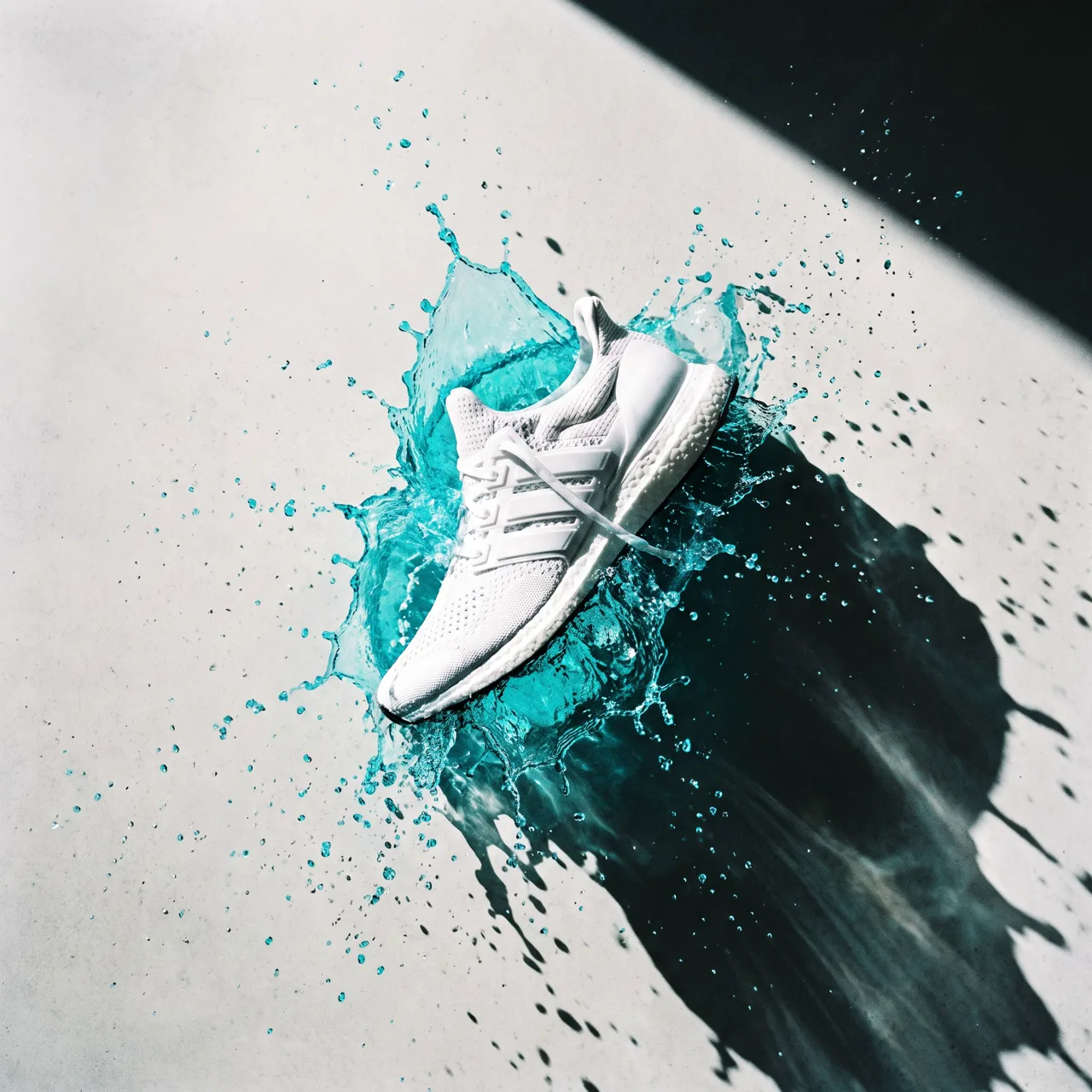
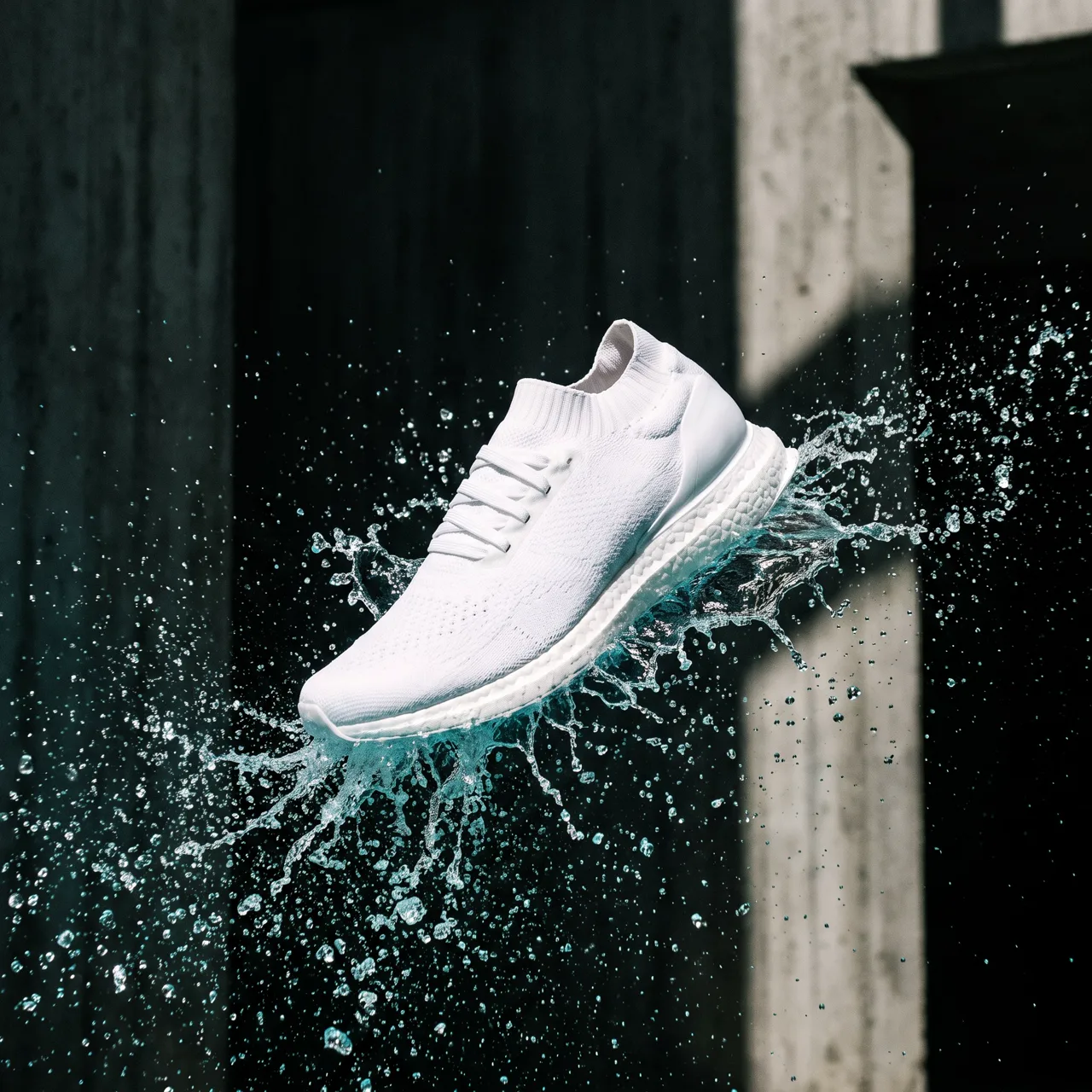
Prompt idea: a white running shoe bursting through turquoise water. The prompt names no brand, yet the striped side panel still recalls a famous sportswear design — exactly the kind of thing to check before commercial use.
Image models have learned from countless real products, so even without a brand in the prompt they can produce something that closely resembles a well-known design. Before using an image to sell or advertise, check shapes, stripes, patterns and color schemes; when in doubt, pick another result or use image-to-image with your own product.
| Risk | Typical example | How to avoid it |
|---|---|---|
| Someone else’s trademark | “Running shoes with a famous sportswear logo” | Never name brands in prompts; inspect results for look-alike logos and signature designs |
| Real people’s likeness | A celebrity or influencer endorsing your product | Don’t generate identifiable real people for commercial use |
| Famous characters | Characters from films, games or anime | Keep other companies’ characters out of commercial work |
| Imitating a living artist | “In the style of [artist name]” | Describe the style instead of naming the artist |
| Reference images | Uploading someone else’s photo to image-to-image | Upload only images you have rights to |
| Misleading ads | Showing results the product can’t deliver | Keep products accurate; don’t invent outcomes |
| Maps and national symbols | AI-drawn maps with wrong borders | Don’t use AI-generated maps in commercial materials |
| Missing disclosure | Posting AI images without a label | Use the platform’s AI declaration |
About “in the style of”
Naming a living artist is the most contested habit in AI image making. Whether a style can be protected is still being argued, but the disputes, backlash and takedowns are real business risks. You almost never need a name; describe what you actually like:
- Instead of an illustrator’s name: “soft watercolor washes, visible paper texture, muted pastel palette”
- Instead of a studio’s name: “anime film look, luminous sky, finely detailed clouds”
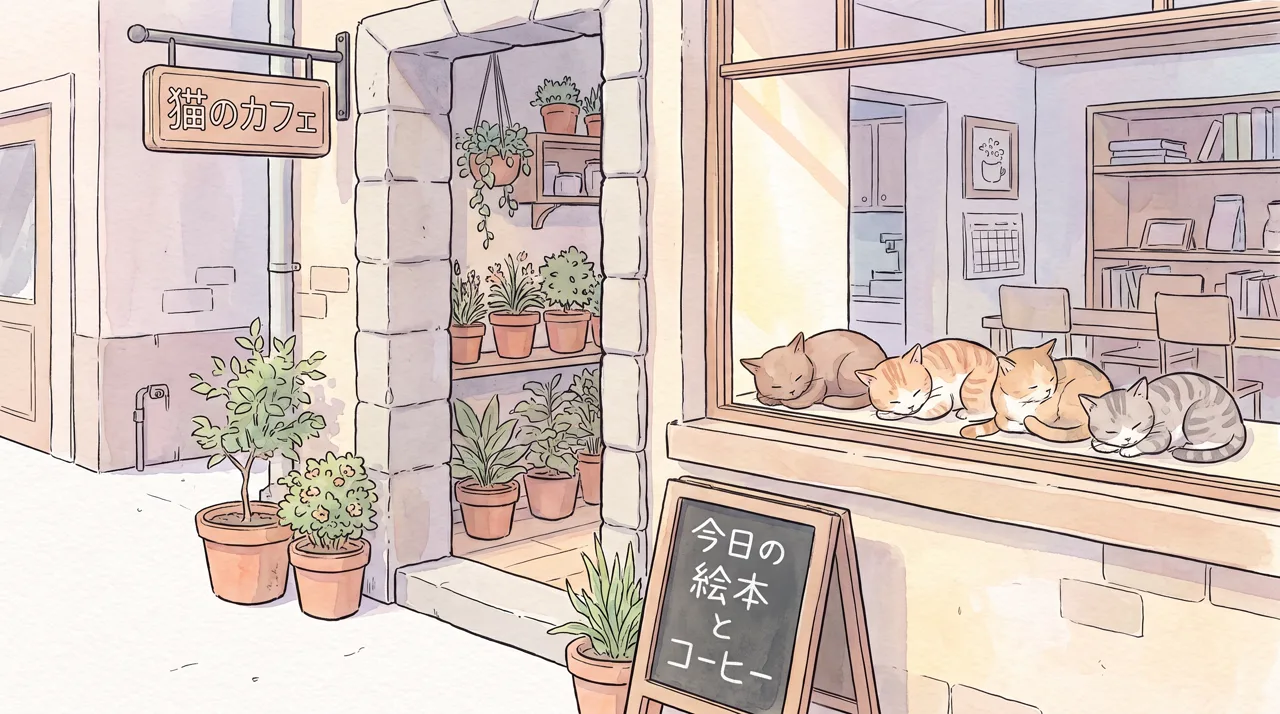
Prompt idea: a little cat café on a street corner, cats on the windowsill, plants at the door, picture-book style — style comes from descriptive words, not an artist’s name.
Our guide to AI art styles lists descriptive phrases for common looks.
Check text and numbers, too
Text in AI images is often wrong. The shop signs in the café above were added by the engine itself; before commercial use, either confirm such text or replace it in a design tool. And never generate certificates, test reports or credentials — that is not a copyright question but fraud.
Using this site for commercial work
- With text-to-image, keep brand names, real people and famous characters out of your prompts.
- With image-to-image, upload only references you own or are licensed to use.
- Keep records. Your images are saved in My images; note your prompts and edits alongside them.
- No watermark is added, and images download at full size, so you can keep working in your design tool. Text and layout you add are your own creative work.
- Disclose AI content where platforms require it. For e-commerce and social specifics, see our AI product photo workflow and Xiaohongshu cover guide.
When to call a lawyer
Get professional review before large ad campaigns, packaging and big print runs, registering an AI-generated design as a trademark, or taking action against someone who copied your image.
For original prompts you can safely adapt, start with the prompt library. Once more: this is not legal advice, and regulations and platform rules change — check the official sources.